
Table Of Contents
- Quick Verdict
- The One Lie: Join First, Figure It Out Later
- The One Fix: Spend Your First Week Building A System
- The One Number: Your First-Week Decision Budget
- Before You Join Endurance
- Day 1: Verify Access, Price, And Categories
- Day 2: Choose One Primary Category
- Day 3: Learn Monitors Without Chasing Everything
- Day 4: Understand Gargantua AIO Without Overusing It
- Day 5: Track Buyer Math
- Day 6: Run A Small Controlled Test
- Day 7: Decide Continue, Change, Or Cancel
- Beginner Mistakes To Avoid
- Who Should Start Slower
- Related Endurance Guides
- FAQ
- Final Verdict
Quick Verdict
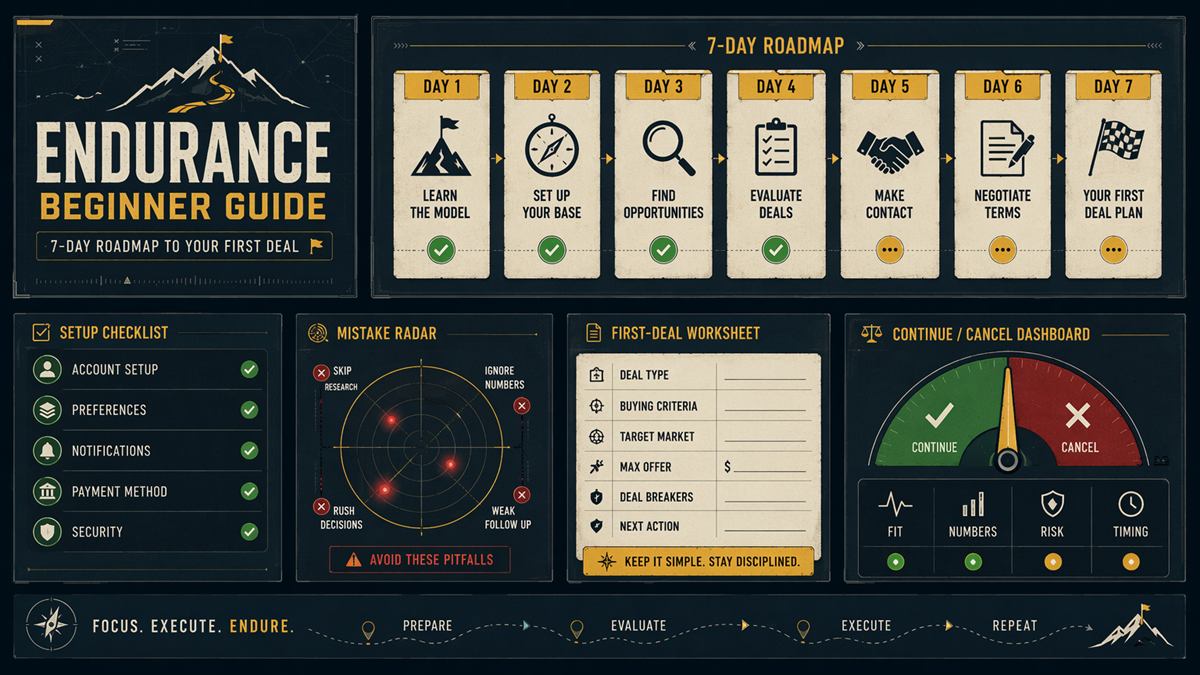
The best way to use Endurance as a beginner is not to join and immediately chase every alert. The best way is to spend the first seven days building a repeatable decision system.
Endurance is broad. Check the live Whop listing for the current rating, review count, joined count, plan options, and checkout price. Whop's Endurance review says the group launched in 2018 by YouTuber Keith Adam and describes features including Gargantua AIO Bot, custom monitors, insider restock alerts, Amazon FBA tools, E-Deals, free or discounted food, and categories such as sneakers, Pokemon, clothing, collectibles, and electronics. It also references the referenced monthly price or the referenced annual price, which should be checked live before joining.
That feature set can be useful, but it can overwhelm a beginner. Too many channels, too many alerts, too many categories, and too much urgency can turn a paid membership into expensive scrolling. Your first week should be about setup, filters, buyer math, and small tests.
If you want the full product explanation, read What Is Endurance. If you are worried about legitimacy, read Is Endurance Legit. If you need pricing context, read Endurance Pricing. This guide focuses only on your first seven days.
The One Lie: Join First, Figure It Out Later
The beginner lie is that you can join a paid reselling group and figure it out as you go.
That sounds harmless, but it creates two problems. First, you waste the trial window learning basic navigation instead of testing value. Second, you may act on alerts before you understand costs, demand, or risk.
A paid group can make a beginner feel like they are inside a business machine. Monitors fire. Members talk. Tools exist. Deals appear. But activity is not the same as a process. If you do not know what category you are testing, what your budget is, what fees apply, or how to decide whether an alert is worth acting on, the group can push you into random buying.
Endurance may provide valuable information and tools, but beginners need guardrails. The first week is not about proving you can make a huge profit. It is about proving you can use the community without losing discipline.
Treat any profit claim, including $1,000+ weekly-style marketing, as a possibility claim, not a beginner expectation. For the full math on that topic, read Can Endurance Help You Make $1,000 Weekly.
The One Fix: Spend Your First Week Building A System
The fix is to treat week one as system setup.
A system means you know where to look, what to ignore, how to calculate value, and when to act. It does not need to be complicated. It just needs to prevent impulsive decisions.
Your first-week system should answer:
- Which category am I testing first
- Which channels or monitors matter
- What is my spending limit
- What profit or savings target justifies the membership
- Which alerts are outside my plan
- How will I track outcomes
- When will I decide whether to continue
This is more useful than trying to understand every feature immediately. Endurance covers sneakers, Pokemon, clothing, collectibles, electronics, FBA tools, E-Deals, food deals, monitors, and Gargantua AIO. You do not need all of that on day one.
You need a narrow test.
The One Number: Your First-Week Decision Budget
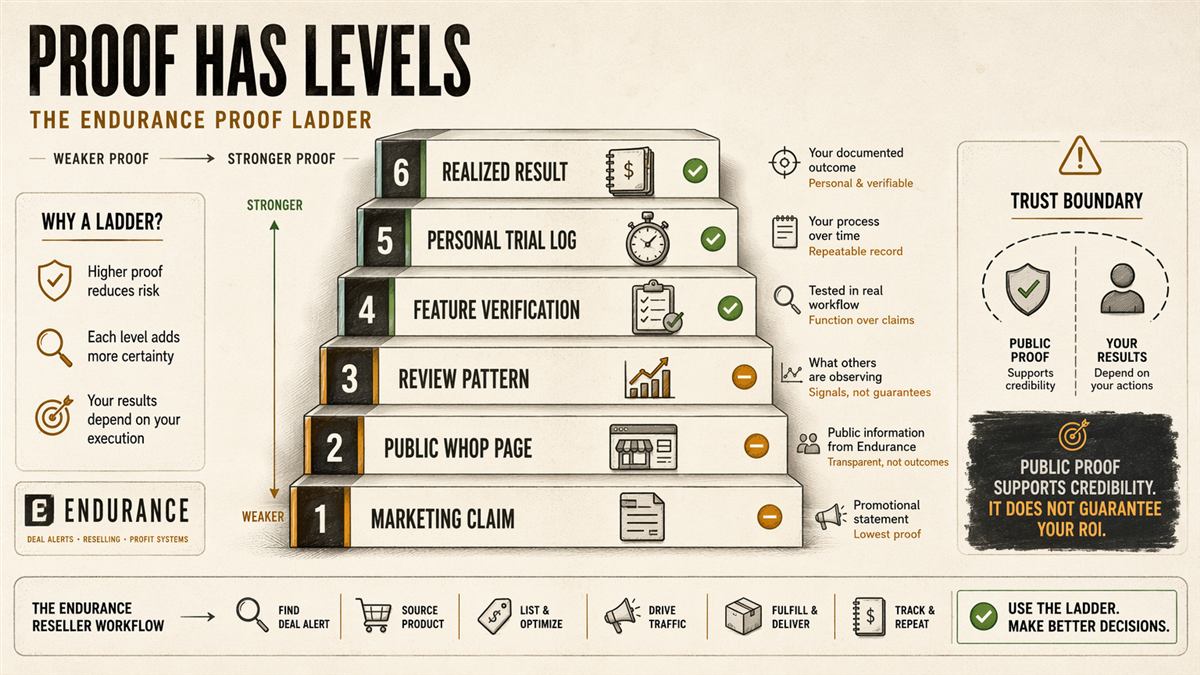
Your first number is not profit. It is decision budget.
A decision budget is the maximum amount of money you are willing to risk or spend while learning. For a complete beginner, that number may be zero. You can spend the first week observing, logging alerts, and calculating hypothetical outcomes. That is still useful.
If you do spend, keep it controlled. You might decide your first-week buy limit is $50, $100, or $250 depending on your financial situation. Do not let the membership fee pressure you into oversized buys.
At a weekly price point, Endurance's subscription cost is measurable. But the real danger for beginners is not the membership fee. It is buying bad inventory because an alert felt urgent. One bad electronics buy, one weak sneaker, or several impulse clothing purchases can cost far more than the weekly fee.
The safest beginner target is learning value first, profit second.
Before You Join Endurance
Before joining, write down your reason.
Bad reason: "I want to make money online."
Better reason: "I want to test whether Endurance monitors help me find sneaker restocks faster than free sources."
Better reason: "I want to learn whether E-Deals and food discounts can offset the weekly fee."
Better reason: "I want to test Pokemon restock alerts without buying more than $100 in the first week."
Better reason: "I want to see whether Gargantua AIO is relevant to my current workflow."
A narrow reason makes the trial measurable. A vague reason makes it easy to drift.
Also check the current Whop price and plan options. The live Whop checkout shows the current price, while Whop's review references the referenced monthly price and the referenced annual price. Pricing and terms can change, so live checkout is the final source.
Day 1: Verify Access, Price, And Categories
Day 1 is for orientation.
Verify that you joined the correct product and that the CTA you used points to Endurance: https://whop.com/endurance/endurance?a=digitalartlab. Confirm the price, billing cadence, cancellation options, and what you can access.
Then map the product. Find where the core categories live: sneakers, Pokemon, clothing, collectibles, electronics, Amazon FBA tools, E-Deals, food deals, monitors, restocks, and Gargantua AIO. Do not try to master them all. Just learn the layout.
Create a simple document with three columns:
- Channel or feature.
- What it appears to do.
- Whether it matters to your first-week goal.
This prevents confusion. You are not judging value yet. You are building the map.
For the broader product overview, use What Is Endurance.
Day 2: Choose One Primary Category
Day 2 is where discipline starts.
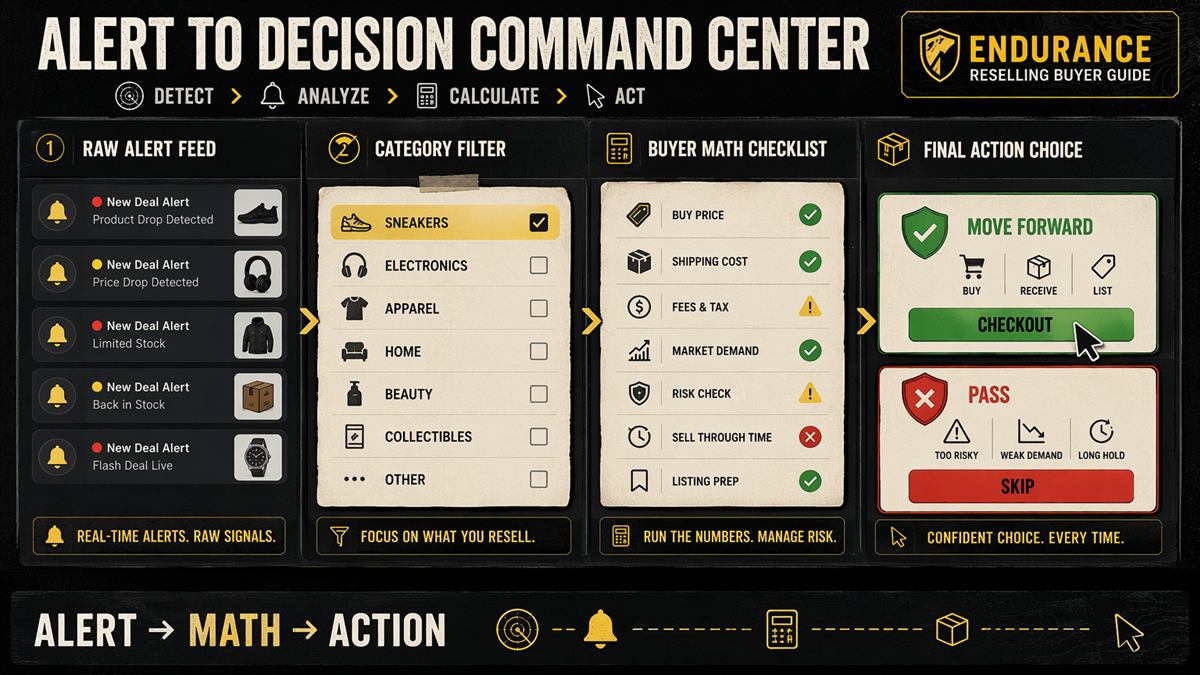
Choose one primary category. Not three. One.
Sneakers are best if you care about releases, restocks, size demand, and speed. Read Endurance For Sneaker Reselling.
Pokemon and collectibles are best if you understand sealed product, scarcity, and collector demand. Electronics are better for people comfortable with higher-ticket risk. Clothing can work if you understand sizing and brand demand. Read Endurance For Pokemon, Collectibles, Electronics, And Clothing.
E-Deals and food deals may be better for cautious beginners because they can produce savings without inventory risk. But savings only count if you would have bought the item anyway.
Once you pick the category, mute or ignore the rest for the first week. You can expand later.
Day 3: Learn Monitors Without Chasing Everything
Day 3 is for monitor observation.
Monitors are alert systems that help members see restocks, price changes, releases, or deals faster. Endurance's custom monitors are a major part of the offer described by Whop. But beginners should observe before buying.
For your chosen category, log alerts for one day. Record:
- Time.
- Product.
- Source.
- Category.
- Estimated retail price.
- Why it might matter.
- Whether you could act in time.
- Whether it was still live when you checked.
Do not judge monitors by how many alerts appear. Judge whether they are relevant and actionable. The monitor guide explains this in detail: Endurance Monitors Explained.
Day 4: Understand Gargantua AIO Without Overusing It
Day 4 is for tool literacy.
Gargantua AIO Bot is one of Endurance's named features. It may help with certain automation and execution workflows, but beginners should not treat it as a money button.
Your day-4 goal is to understand where Gargantua fits. Ask:
- What does it appear designed to do
- Which categories or sites are relevant
- Is there setup guidance
- Do experienced members discuss risk
- Would the tool help your chosen category
- Are you ready to use it, or should you stay manual first
For many beginners, the right answer is to learn the tool but not rely on it yet. Automation can make good decisions faster, but it can also make bad decisions faster.
Read Gargantua AIO Bot Review before treating it as your main reason to join.
Day 5: Track Buyer Math
Day 5 is for math.
Create a simple sheet with these columns:
- Product.
- Category.
- Alert source.
- Buy price.
- Tax.
- Shipping.
- Expected sale price.
- Marketplace fees.
- Expected net.
- Risk notes.
- Actual outcome.
If you are using deals for savings, replace expected sale price with "would I have bought this anyway" Savings from unnecessary purchases do not count.
This sheet makes your trial real. Without it, you will remember activity and forget outcomes.
At the end of the week, compare your expected or actual value against the membership cost. Use Endurance Pricing for the subscription math.
Day 6: Run A Small Controlled Test
Day 6 is optional buying day.
If you are not ready, do not buy. Continue observing. A no-buy trial can still teach you whether Endurance alerts are useful.
If you do buy, keep the test small and controlled. Choose one alert that fits your category, budget, and math. Write down why you are acting before you act.
A good test has a clear reason:
- The item has completed sales.
- The expected net margin is acceptable.
- The deal is still live.
- The risk is limited.
- You understand the exit path.
A bad test is "people in chat seem excited."
Day 7: Decide Continue, Change, Or Cancel
Day 7 is the review.
Ask three questions:
- Did Endurance help me see relevant opportunities faster than free sources
- Did I understand what to do with those opportunities
- Did the expected or actual value justify another billing period
If yes, continue with a tighter plan. If no, cancel or keep learning free. If partly, change category or extend only if the cost is comfortable.
Do not renew because you "might use it more next week." Renew because you have a measurable reason.
The Endurance Trial Checklist gives a more detailed version of this review.
Beginner Mistakes To Avoid
The first mistake is chasing every category. Endurance is broad, but beginners need focus.
The second mistake is confusing alerts with recommendations. An alert says something happened. It does not always say you should buy.
The third mistake is ignoring fees. Marketplace fees, shipping, taxes, and returns can erase profit.
The fourth mistake is treating Gargantua AIO as a shortcut. It is a tool, not a guarantee.
The fifth mistake is buying to justify the subscription. That logic causes bad risk-taking.
The sixth mistake is failing to compare against free sources. Endurance is worth testing only if it improves your outcome.
The seventh mistake is forgetting cancellation timing. Decide before renewal.
Who Should Start Slower
Start slower if you have no resale experience, limited capital, no marketplace accounts, or no time to act on alerts. Start slower if you are prone to impulse purchases. Start slower if you are only interested because of income claims.
A slower start might mean observing for the first week and spending nothing. That is a valid trial.
You do not need to prove anything on day one. You need to protect your budget and learn the system.
Related Endurance Guides
- Endurance Review 2026
- Is Endurance Legit
- Who Is Keith Adam
- What Is Endurance
- Endurance Pricing
- Gargantua AIO Bot Review
- Endurance For Sneaker Reselling
- Endurance For Pokemon, Collectibles, Electronics, And Clothing
- Endurance Monitors Explained
- Endurance Vs Free Cook Groups
- Endurance Trial Checklist
- Endurance Reviews
- Endurance Alternatives
- Endurance $1,000 Weekly
FAQ
Is Endurance beginner-friendly
It can be beginner-friendly if you start with one category, track outcomes, and avoid chasing every alert. It is not beginner-friendly if you expect automatic profit.
What should I do first after joining
Verify the live price and access, map the channels, choose one category, and start logging alerts before buying.
Should beginners use Gargantua AIO immediately
Usually not as the first move. Beginners should understand products, margins, and monitor alerts before relying on automation.
Can I test Endurance without buying inventory
Yes. You can spend the first week logging alerts, comparing free sources, and calculating hypothetical outcomes.
Where can I join Endurance
Use this link: https://whop.com/endurance/endurance?a=digitalartlab
Final Verdict
Endurance can be useful for beginners, but only if the first week is structured. Check the live Whop listing for current rating, review count, joined count, plan options, and checkout price. Whop's review connects Endurance to Keith Adam, says it launched in 2018, and describes monitors, Gargantua AIO Bot, FBA tools, E-Deals, food deals, and broad resale categories.
That is a lot for a beginner. The answer is not to use everything. The answer is to choose one lane, track alerts, learn buyer math, run small tests, and decide before renewal.
Join Endurance here: https://whop.com/endurance/endurance?a=digitalartlab