
Table Of Contents
- Quick Verdict
- The One Lie: A Trial Is Just Browsing
- The One Fix: Run A Measured Test
- The One Number: Net Value Before Renewal
- Before You Start The Trial
- Checklist 1: Verify Price And Terms
- Checklist 2: Pick One Primary Use Case
- Checklist 3: Configure Alerts And Filters
- Checklist 4: Track Monitors
- Checklist 5: Evaluate Gargantua AIO
- Checklist 6: Track Deals, Savings, And Profit
- Checklist 7: Compare Free Sources
- Checklist 8: Review Before Renewal
- Scoring Table
- Pass, Extend, Or Cancel
- Related Endurance Guides
- FAQ
- Final Verdict
Quick Verdict
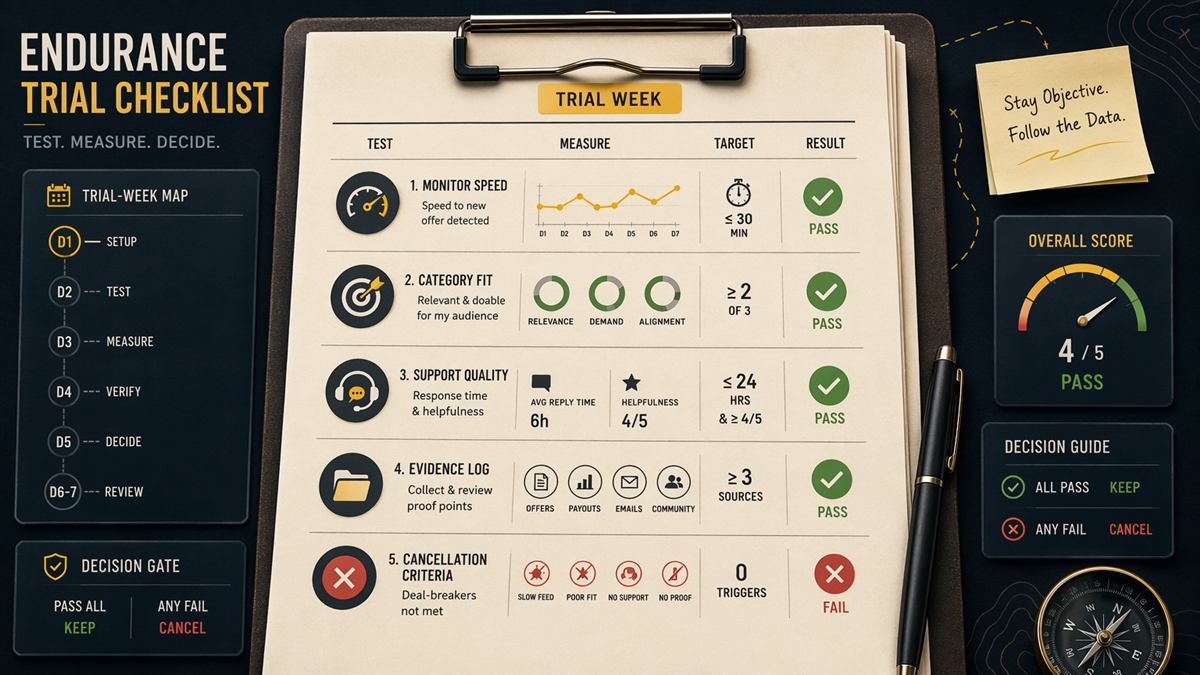
The safest way to test Endurance is to treat the first billing period like a measured trial, not a casual browse. Before you pay long term, you should know whether Endurance helps you find better opportunities, act faster, save money, avoid mistakes, or improve your reselling workflow.
Check the live Whop listing for the current rating, review count, joined count, plan options, and checkout price. Whop's Endurance review says the group launched in 2018 by YouTuber Keith Adam and describes Gargantua AIO Bot, custom monitors, insider restock alerts, Amazon FBA tools, E-Deals, free or discounted food, and categories like sneakers, Pokemon, clothing, collectibles, and electronics. It also references the referenced monthly price or the referenced annual price, so verify live checkout before committing.
Your trial should answer one question: did Endurance create enough incremental net value to justify continuing
That value might be resale profit, real savings, faster alerts, better category understanding, useful tool access, or avoided mistakes. But it needs to be tracked. If you do not track it, you will judge the group by activity and vibes.
For the beginner path, read Endurance Beginner Guide. For pricing, read Endurance Pricing. For monitors, read Endurance Monitors Explained.
The One Lie: A Trial Is Just Browsing
The lie is that a trial means joining, looking around, and deciding later whether the group feels good.
That approach wastes money. A busy community can feel valuable even when you get no usable value. A quiet day can feel disappointing even if the alerts that do appear are high quality. Feelings are not enough.
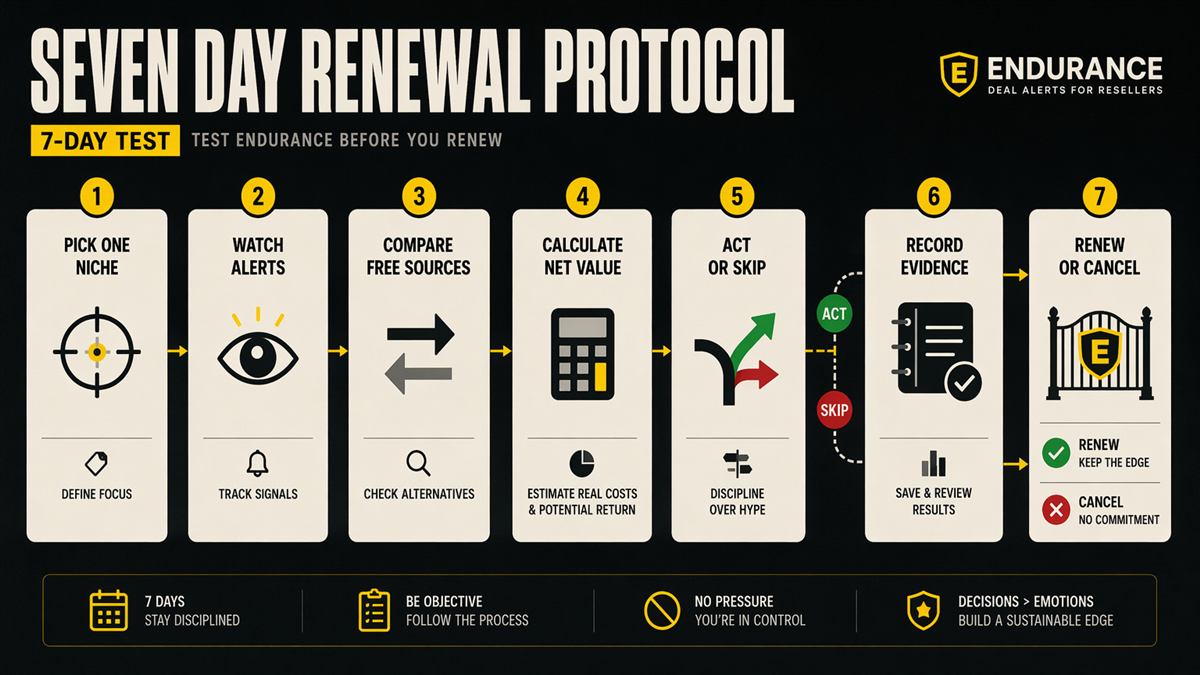
A trial is a test. A test needs a goal, a measurement, a time window, and a decision rule.
Without those, you will probably drift. You may renew because you think next week will be better. You may cancel too early because you did not understand the setup. You may buy inventory without knowing whether the alert was good. You may count savings on items you did not need.
Endurance has enough moving parts that a casual trial is especially risky. Monitors, Gargantua AIO, FBA tools, sneaker alerts, Pokemon restocks, electronics deals, clothing flips, E-Deals, and food discounts all create different value types. You need to pick what you are testing.
The One Fix: Run A Measured Test
The fix is to run a measured trial.
A measured trial has four rules.
First, define your use case. Are you testing sneakers, Pokemon, electronics, clothing, collectibles, Amazon FBA, E-Deals, food deals, monitors, Gargantua AIO, or general deal flow
Second, define your budget. Decide how much you can spend or risk during the trial. This may be zero if you are only observing.
Third, define your tracking sheet. Record alerts, decisions, costs, expected value, and outcomes.
Fourth, define your renewal rule. Decide before renewal whether the trial passed, needs another short test, or should stop.
This measured approach is not about being pessimistic. It is about protecting you from subscription drift.
The One Number: Net Value Before Renewal
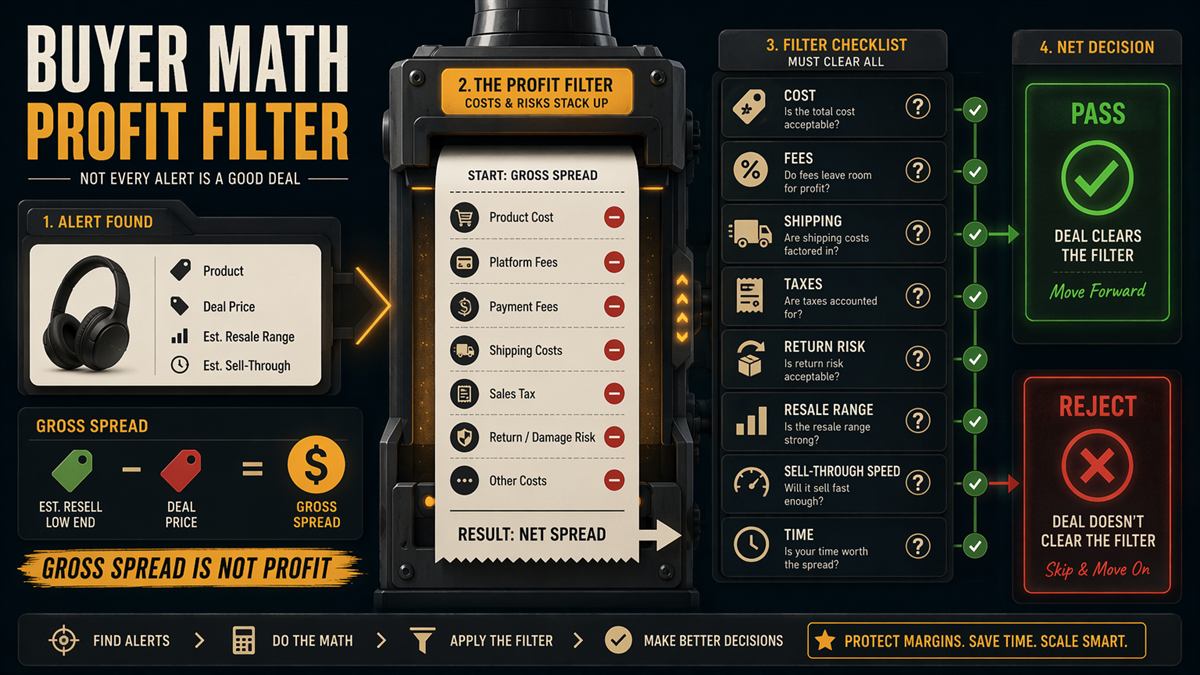
The one number is net value before renewal.
Net value includes actual resale profit, useful savings, time saved, and avoided mistakes, minus costs. It does not include hype, gross sales, screenshots, or money you would have made without Endurance.
Use the live checkout price as the threshold. Did Endurance help create or save more than the current weekly, monthly, or annual cost you would actually pay?
Be strict with attribution. If you found a deal from a free public source first, do not credit Endurance fully. If Endurance alerted earlier, added context, or helped you execute, credit that incremental improvement.
This one number keeps the trial honest.
Before You Start The Trial
Before joining, prepare a simple sheet. You can use a spreadsheet, notes app, or paper. The tool does not matter. The fields do.
Use these columns:
- Date.
- Alert source.
- Category.
- Product or deal.
- Action taken.
- Buy cost.
- Estimated resale or savings.
- Fees/shipping/tax.
- Expected net value.
- Actual outcome.
- Notes.
Also write your trial goal at the top. For example:
"My goal is to test whether Endurance sneaker monitors are faster than free sources."
"My goal is to see whether E-Deals and food discounts offset one weekly payment."
"My goal is to evaluate whether Gargantua AIO is relevant to my current workflow."
Specific goals create useful trials.
Checklist 1: Verify Price And Terms
Start with price.
The live Whop checkout is the final source for current pricing. Whop's review references the referenced monthly price or the referenced annual price. These may change. Check live checkout.
Confirm:
- Price.
- Billing cadence.
- Trial or free access options.
- Cancellation steps.
- Included features.
- Whether Gargantua AIO, monitors, FBA tools, E-Deals, and food deals are available in your plan.
Set a calendar reminder at least one day before renewal. Do not rely on memory.
Checklist 2: Pick One Primary Use Case
Pick one use case first.
If you pick sneakers, test restock and release alert speed. Read Endurance For Sneaker Reselling.
If you pick Pokemon, collectibles, electronics, or clothing, test category-specific deal quality. Read Endurance For Pokemon, Collectibles, Electronics, And Clothing.
If you pick monitors, test time-to-action. Read Endurance Monitors Explained.
If you pick Gargantua AIO, test setup clarity and whether it solves a real execution problem. Read Gargantua AIO Bot Review.
If you pick broad savings, test E-Deals and food deals only on purchases you would have made anyway.
Do not test everything at once.
Checklist 3: Configure Alerts And Filters
Once inside, configure your attention.
Turn on alerts only for the channels relevant to your trial. Mute categories you are not testing. If everything pings you, nothing is high priority.
Good filtering is especially important in broad communities. Endurance covers many categories, and that breadth can become noise for beginners.
Your alert setup should match your schedule. If you can only act after work, do not judge fast midday restocks as useful unless you have a way to respond. If you can act quickly during release windows, monitors may matter more.
Checklist 4: Track Monitors
For each monitor alert in your chosen category, record whether it was:
- Timely.
- Relevant.
- Still live when checked.
- Clear enough to understand.
- Worth acting on.
- Better than free sources.
Do this even if you do not buy. A missed alert can still teach you whether the monitor was useful.
Monitor value is about signal quality and time-to-action, not alert volume.
Checklist 5: Evaluate Gargantua AIO
If Gargantua AIO matters to your trial, evaluate it separately from the rest of Endurance.
Ask:
- Can you access it
- Is setup understandable
- Does it support the opportunities you care about
- Does it require skills or tools you do not have
- Are members discussing responsible use
- Does it improve execution or just add complexity
Do not treat Gargantua AIO as guaranteed checkout software. It is an execution tool. It becomes useful only when paired with good product selection and risk control.
Checklist 6: Track Deals, Savings, And Profit
Track every action.
For resale, calculate net profit after retail cost, tax, shipping, marketplace fees, payment fees, returns, packaging, and time. For savings, count only purchases you would have made anyway. For FBA, include restrictions, referral fees, fulfillment fees, inbound shipping, prep, storage, returns, and competition.
This is where many trials become honest. You may discover that the group produces many interesting alerts but few profitable ones for your situation. Or you may discover that a handful of alerts cover the membership.
Either outcome is useful.
Checklist 7: Compare Free Sources
Do not test Endurance in isolation.
Pick a few free sources: public deal feeds, store newsletters, release calendars, free groups, social accounts, or coupon sites. Compare alert timing and deal quality.
If Endurance posts the same deals later than free sources, that matters. If Endurance posts earlier, adds context, or surfaces deals free sources miss, that matters too.
The comparison guide, Endurance Vs Free Cook Groups, explains how to judge this fairly.
Checklist 8: Review Before Renewal
Before renewal, review the sheet.
Ask:
- Did Endurance create net value
- Did it save time
- Did it help avoid bad buys
- Did monitors beat free sources
- Did Gargantua AIO matter
- Did E-Deals or food deals create useful savings
- Did the community context help
- Did the subscription fit your schedule
Then decide.
Do not keep paying because you feel like you have not used it enough. That is a reason to stop or reset, not a reason to drift.
Scoring Table
Score each area from 1 to 5.
| Area | Score | Notes |
|---|---|---|
| Alert relevance | ||
| Monitor speed | ||
| Category fit | ||
| Tool usefulness | ||
| Community context | ||
| Savings value | ||
| Resale profit potential | ||
| Ease of use | ||
| Comparison vs free sources | ||
| Renewal confidence |
A high score does not require profit in week one if you are still learning, but it should show a credible path to value. Low scores across most categories mean you should cancel or change your test.
Pass, Extend, Or Cancel
Pass means Endurance clearly created enough value or showed a strong enough path to value. Continue, but keep tracking.
Extend means the signal is promising but incomplete. Maybe you need another short billing period, a different category, or more setup time. Extend only if the cost is comfortable.
Cancel means you did not use it, could not act, found better free sources, or saw no clear path to value. Canceling is not failure. It is correct trial discipline.
Related Endurance Guides
- Endurance Review 2026
- Is Endurance Legit
- Who Is Keith Adam
- What Is Endurance
- Endurance Pricing
- Gargantua AIO Bot Review
- Endurance For Sneaker Reselling
- Endurance For Pokemon, Collectibles, Electronics, And Clothing
- Endurance Monitors Explained
- Endurance Vs Free Cook Groups
- Endurance Beginner Guide
- Endurance Reviews
- Endurance Alternatives
- Endurance $1,000 Weekly
FAQ
How long should I test Endurance
At minimum, test one billing period with a clear goal. A week can show access and alert relevance. A month can show more realistic category value.
Should I buy annual immediately
Only if you already know Endurance fits your workflow. Beginners should usually test shorter periods first.
What should I track
Track alerts, source, category, action, cost, fees, expected net value, actual outcome, and whether Endurance beat free sources.
Can I trial Endurance without buying anything
Yes. Observation and alert logging can be a valid first test, especially for beginners.
Where can I join Endurance
Use this link: https://whop.com/endurance/endurance?a=digitalartlab
Final Verdict
Endurance should be tested with a scorecard, not judged by first impressions. Check the live Whop listing for current rating, review count, joined count, plan options, and checkout price. Whop's review ties Endurance to Keith Adam, says it launched in 2018, and describes monitors, Gargantua AIO Bot, FBA tools, E-Deals, food deals, and broad resale categories.
That is enough to justify a serious trial for the right buyer. It is not enough to justify long-term payment without measurement.
Set a use case, track net value, compare free sources, and decide before renewal.
Join Endurance here: https://whop.com/endurance/endurance?a=digitalartlab