
Table Of Contents
- Quick Verdict
- The One Lie: The Cheapest Plan Is Always Best
- The One Fix: Match Billing To Confidence
- The One Number: Break-Even Value
- Current Endurance Pricing Signals
- Weekly Pricing
- Monthly Pricing
- Annual Pricing
- Pricing Comparison Table
- What You Are Paying For
- Buyer Math By Use Case
- Who Should Choose Weekly
- Who Should Choose Monthly
- Who Should Choose Annual
- Pricing Red Flags
- Trial Checklist
- Related Endurance Guides
- FAQ
- Final Verdict
Quick Verdict
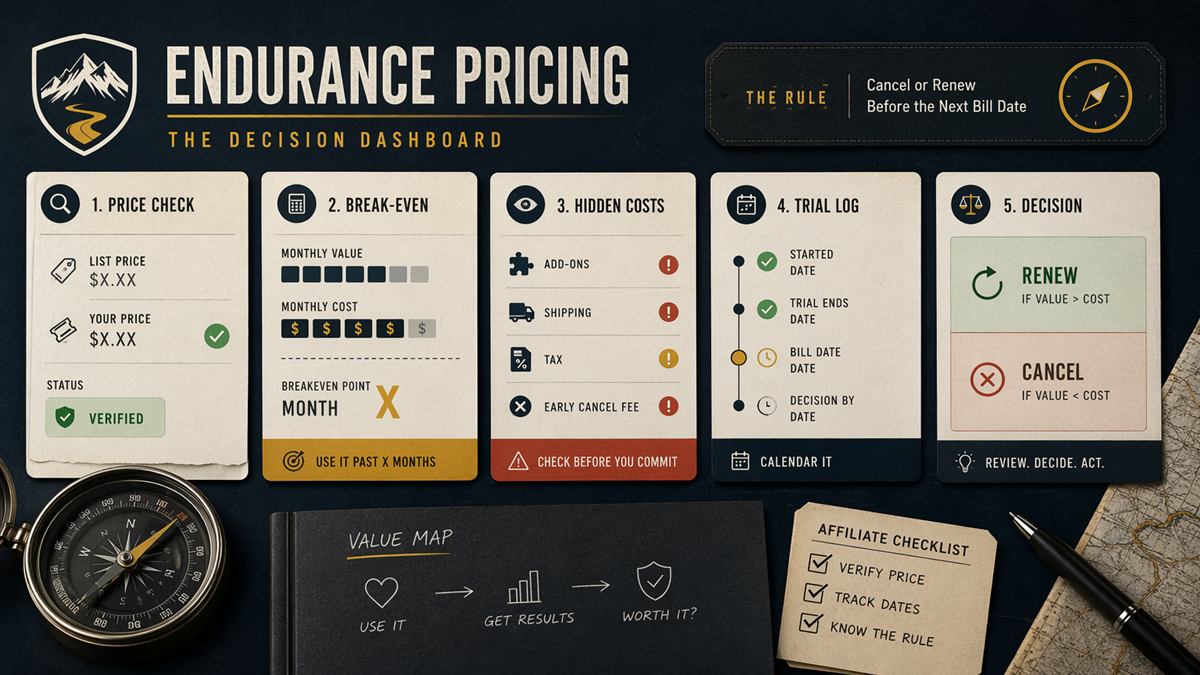
Check the live Whop listing for the live weekly price. Whop's Endurance review also references the referenced monthly price and the referenced annual price. Because prices and plan availability can change, the live Whop checkout should be treated as the final source before joining.
The clean pricing verdict is this: weekly is best for cautious testing, monthly is best for active evaluation, and annual is only for users who already know Endurance fits their workflow.
Endurance is not priced like a simple coupon list. Whop's review describes a broader stack: Gargantua AIO Bot, custom monitors, insider restock alerts, Amazon FBA tools, E-Deals, free or discounted food, sneakers, Pokemon, clothing, collectibles, and electronics. The live listing should be checked for public rating, public reviews, and a public joined count.
The subscription is rational only if the product helps you create or save more value than it costs. That value can come from resale profit, useful savings, time saved, tool access, or avoided mistakes. It should not be measured by hype or screenshots.
For the full review, read Endurance Review 2026. For the practical trial, read Endurance Trial Checklist.
The One Lie: The Cheapest Plan Is Always Best
The lie is that the cheapest annualized plan is always the smartest plan.
Annual pricing can be cheapest per month, but it has the highest commitment. If you stop using the product after two weeks, annual is not cheap. Weekly is more expensive over time, but it protects uncertain buyers. Monthly sits in the middle.
Pricing should follow confidence. If you have low confidence, buy flexibility. If you have medium confidence, buy enough time to test. If you have high confidence from proven use, consider longer commitment.
Do not buy annual because you hope it will force discipline. Subscriptions do not create systems. Systems create value.
The One Fix: Match Billing To Confidence
The fix is to match the billing period to your evidence.
Weekly works when you are still inspecting the product. You can check channels, alerts, monitor relevance, and tool access with lower commitment.
Monthly works when you are ready to actively test a category. A month gives more time to see deal flow, compare free sources, and track outcomes.
Annual works only after you have proof that Endurance is part of your regular workflow. Proof means measured value, not intention.
This is especially important because Endurance is broad. You may discover that sneakers do not fit your schedule but E-Deals do. Or monitors are valuable but Gargantua AIO is not yet relevant. A shorter plan lets you learn without overcommitting.
The One Number: Break-Even Value
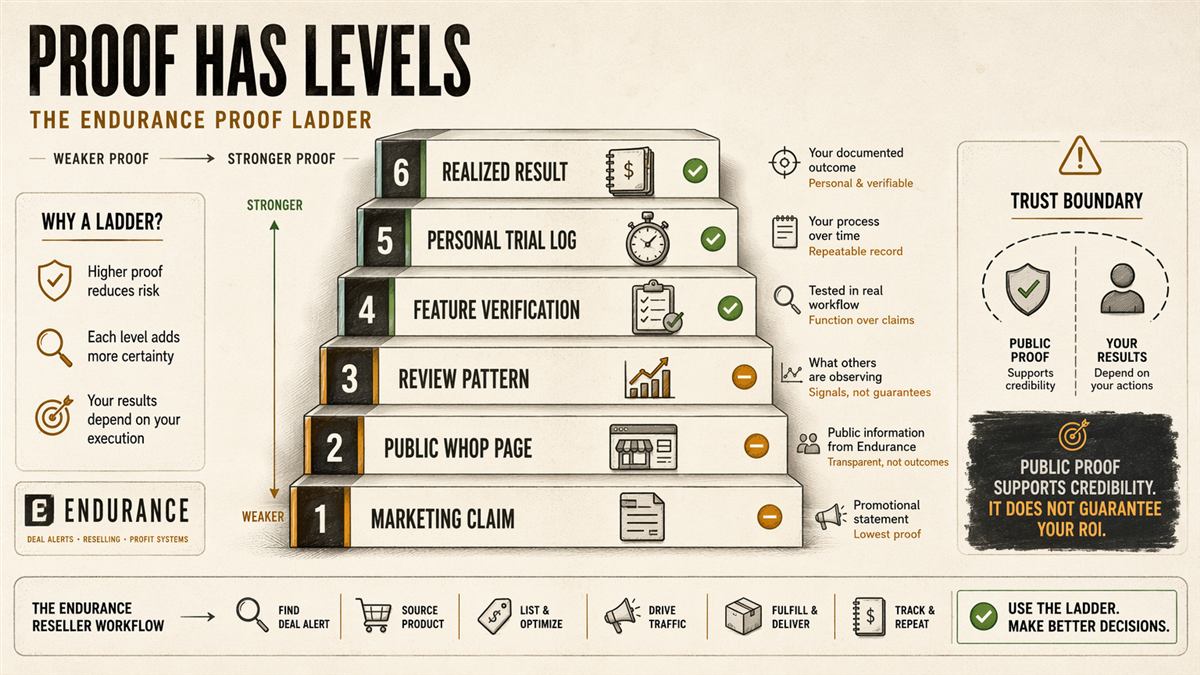
The one number is break-even value.
At a weekly price point, the weekly break-even is the live weekly price in real value. At the referenced monthly price, the monthly break-even is roughly $59. At the referenced annual price, the yearly break-even is the referenced annual price, or about $49.92/month on average.
Real value can include resale net profit, savings on purchases you would have made anyway, time saved from research, or avoided mistakes. But you need to track it.
Do not count revenue as profit. Do not count hypothetical resale. Do not count discounts on things you did not need. Do not count deals you found from free sources first as full Endurance value.
Current Endurance Pricing Signals
The live Whop checkout is the final source for current pricing. Whop's review references the referenced monthly price and the referenced annual price. The listing also shows public rating, public reviews, and a public joined count.
The price is visible enough to do buyer math before joining. That transparency is useful.
Still, checkout is the final authority. Whop sellers can change prices, plans, trials, or included features. Always verify live terms before paying.
Weekly Pricing
Weekly pricing is best for first-time testers and cautious buyers. It limits initial commitment and forces a near-term decision.
Use weekly if:
- You are new to Endurance.
- You are unsure which category you will use.
- You want to inspect monitor quality.
- You want to compare free sources.
- You are unsure whether your schedule allows fast action.
The risk is drift. If you keep renewing weekly for months, you may pay more than monthly or annual options.
Monthly Pricing
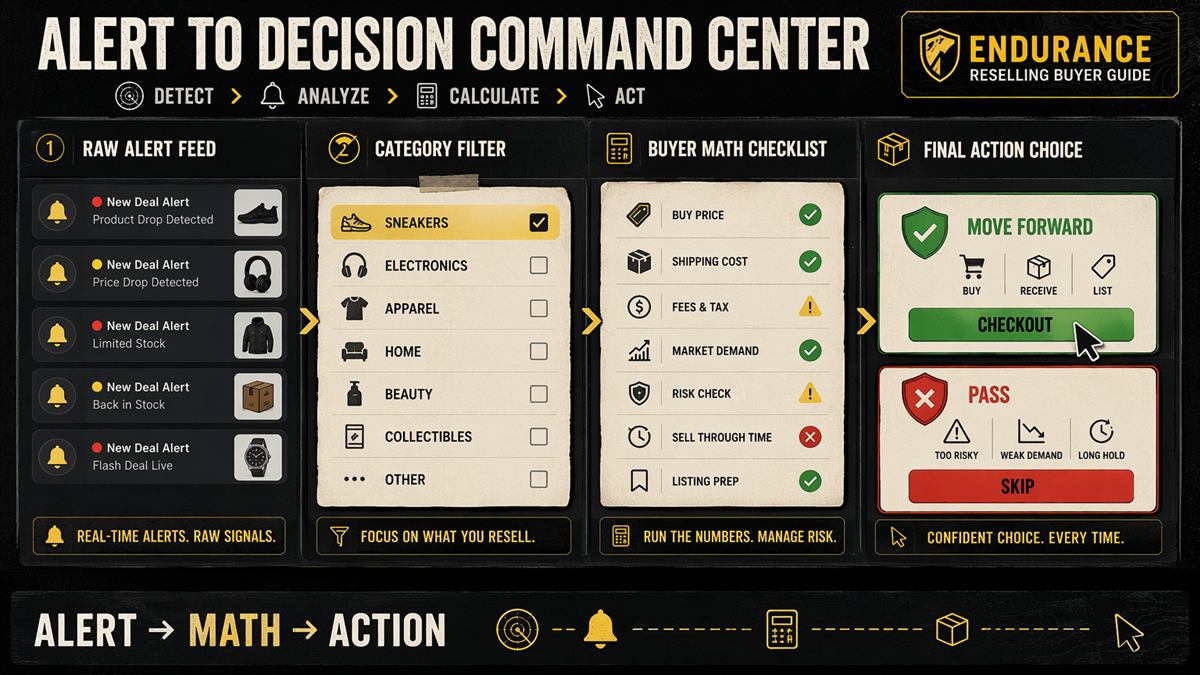
Monthly pricing is the practical middle ground. Whop's review references the referenced monthly price. A month gives enough time to see more deal flow, test alerts, understand channels, and track outcomes.
Use monthly if:
- You have a category goal.
- You can actively test for a full month.
- You want enough data before annual commitment.
- You can track profit or savings.
Monthly is often the best default for serious but uncertain users.
Annual Pricing
Whop's review references the referenced annual price. Annual can be the best long-term value if you know Endurance fits.
Use annual only if:
- You already tested shorter access.
- You use multiple features regularly.
- You can show measured monthly value.
- You understand your categories.
- You are not relying on hope.
Annual is risky for beginners. A lower effective monthly cost does not help if you stop using the product.
Pricing Comparison Table
| Plan Reference | Best For | Main Advantage | Main Risk |
|---|---|---|---|
| the live weekly price | First test | Lowest initial commitment | Expensive if held too long |
| the referenced monthly price | Active evaluation | Better testing window | Requires real usage |
| the referenced annual price | Proven users | Lower long-term average | High upfront commitment |
Annualized math:
| Billing Pattern | Approximate Annual Cost |
|---|---|
| weekly pricing for 52 weeks | $883.48 |
| monthly pricing for 12 months | $707.88 |
| annual pricing | the referenced annual price |
Annual wins on pure long-term price. Weekly wins on flexibility. Monthly often wins on practical evaluation.
What You Are Paying For
You are paying for potential access to a broad system: monitors, Gargantua AIO Bot, restock alerts, FBA tools, E-Deals, food deals, category channels, and community context.
You are not paying for guaranteed profit.
This distinction matters. If you use only one feature, compare the price against alternatives. If you use multiple features, Endurance may be easier to justify.
Read Endurance Alternatives before committing long term.
Buyer Math By Use Case
Sneaker resellers should compare subscription cost against net profit from restocks, releases, and size-specific opportunities. Read Endurance For Sneaker Reselling.
Pokemon, collectibles, electronics, and clothing buyers should compare against category-specific sell-through and fee-adjusted margin. Read Endurance For Pokemon, Collectibles, Electronics, And Clothing.
Monitor-focused users should compare alert usefulness against free sources. Read Endurance Monitors Explained.
Bot-focused users should judge whether Gargantua AIO solves a real execution problem. Read Gargantua AIO Bot Review.
Beginners should judge learning and small controlled tests first. Read Endurance Beginner Guide.
Who Should Choose Weekly
Choose weekly if you are new, uncertain, or testing one narrow use case. Weekly gives you a clean inspection window.
Set a renewal reminder. Do not let weekly become passive recurring spend.
Who Should Choose Monthly
Choose monthly if you can actively test Endurance for a full month. This is the most reasonable middle option for many users because it gives enough time for category flow and outcome tracking.
Who Should Choose Annual
Choose annual only after proving value. Annual is best for users who already know they will use Endurance consistently across monitors, tools, categories, or savings.
Pricing Red Flags
Red flag one: choosing annual before using the product.
Red flag two: buying because of income claims instead of measured fit.
Red flag three: not knowing your category.
Red flag four: failing to track outcomes.
Red flag five: counting impulse purchases as savings.
Red flag six: paying for tools you do not use.
Trial Checklist
- Verify live checkout price.
- Start weekly or monthly if uncertain.
- Pick one category.
- Track alerts and outcomes.
- Compare free sources.
- Calculate real net value.
- Decide before renewal.
- Upgrade only after proof.
Related Endurance Guides
- Endurance Review 2026
- Is Endurance Legit
- Who Is Keith Adam
- What Is Endurance
- Gargantua AIO Bot Review
- Endurance For Sneaker Reselling
- Endurance For Pokemon, Collectibles, Electronics, And Clothing
- Endurance Monitors Explained
- Endurance Vs Free Cook Groups
- Endurance Beginner Guide
- Endurance Trial Checklist
- Endurance Reviews
- Endurance Alternatives
- Can Endurance Help You Make $1,000 Weekly
FAQ
How much does Endurance cost
The live Whop checkout is the final source for current pricing. Whop's review also references the referenced monthly price and the referenced annual price. Verify live checkout before joining.
Is weekly or monthly better
Weekly is better for first inspection. Monthly is better for an active test.
Is annual worth it
Only after you have proven Endurance fits your workflow.
What is the break-even point
At the listed weekly price, break-even starts at the live weekly price in real value. Use current checkout pricing for final math.
Where can I join Endurance
Use this link: https://whop.com/endurance/endurance?a=digitalartlab
Final Verdict
Endurance pricing is easiest to judge by confidence. Weekly is for testing, monthly is for active evaluation, and annual is for proven users.
The live listing should be checked for the live weekly price, public rating, public reviews, and a public joined count. Whop's review references the referenced monthly price and the referenced annual price and describes a broad feature stack. That stack may be worth paying for if you use it, but it still needs to beat the subscription cost.
Join Endurance here: https://whop.com/endurance/endurance?a=digitalartlab