Table Of Contents
- Quick Verdict
- The One Lie: Faster Alerts Always Mean Better Buys
- The One Fix: Judge Monitors By Signal, Not Volume
- The One Number: Time-To-Action
- What Are Reselling Monitors
- What Endurance Says About Monitors
- Why Monitor Speed Matters
- Why Speed Alone Is Not Enough
- Categories Monitors Can Support
- Monitor Alerts Vs Gargantua AIO
- How To Test Monitor Quality
- Buyer Math For Monitor-Driven Deals
- Who Endurance Monitors Fit
- Who Should Ignore Monitors
- Trial Checklist
- Related Endurance Guides
- FAQ
- Final Verdict
Quick Verdict
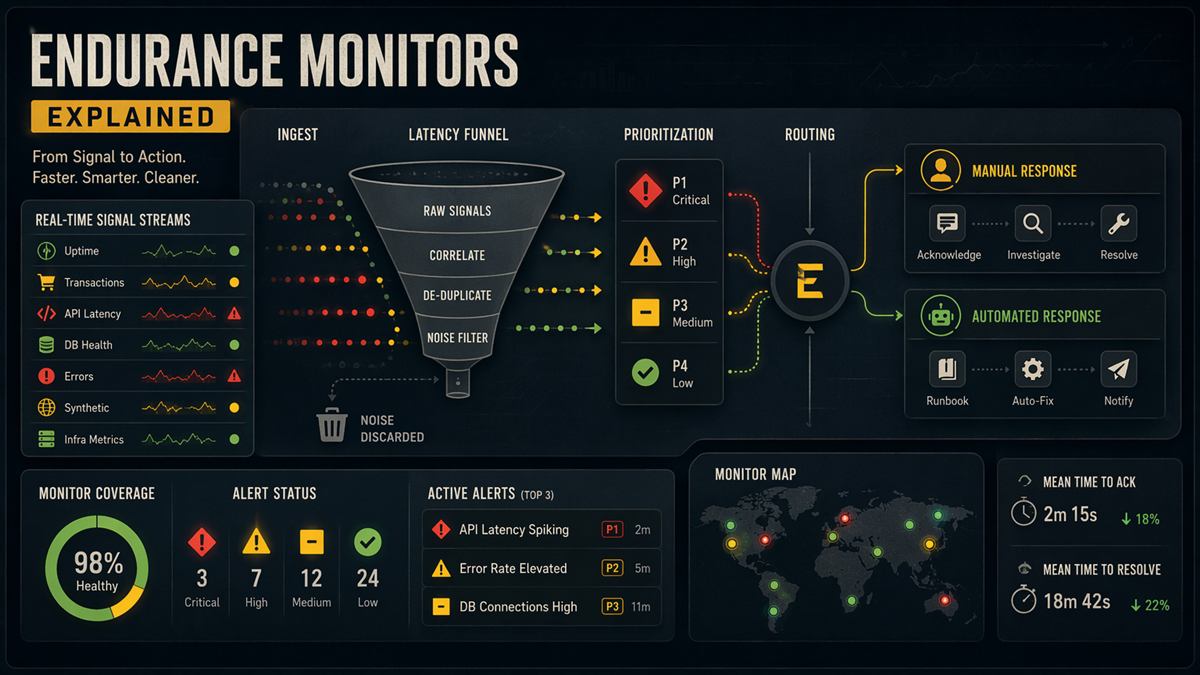
Endurance monitors are one of the most important parts of the membership because reselling is often a timing game. A useful monitor can surface a restock, deal, price error, release, or availability change before a manual buyer would notice it. That speed can matter for sneakers, Pokemon, clothing, collectibles, electronics, E-Deals, food discounts, and Amazon FBA sourcing.
Check the live Whop listing for the current rating, review count, joined count, plan options, and checkout price. Whop's own review says Endurance launched in 2018 by YouTuber Keith Adam and describes custom in-house monitors, insider restock alerts, Nike-focused monitor coverage, international monitors, Gargantua AIO Bot, FBA tools, E-Deals, and multiple resale categories. It also references the referenced monthly price or the referenced annual price, so verify live checkout before buying.
The reason monitors matter is simple: if you learn about a profitable restock after it sells out, the information has no practical value. But the reason monitors can be dangerous is just as simple: fast alerts can make bad buys happen faster.
Endurance monitors should be judged by signal quality, category fit, alert speed, context, and your ability to act. They should not be judged by noise, hype, or how active a Discord feels.
For broad context, read Endurance Review 2026, What Is Endurance, and Endurance Pricing. For tool execution after alerts, read Gargantua AIO Bot Review.
The One Lie: Faster Alerts Always Mean Better Buys
The lie is that speed automatically creates profit.
Speed helps only when the underlying opportunity is good. A fast alert for a weak product is still weak. A fast alert for a product with no resale demand can trap capital. A fast alert for a price error that gets canceled may be worth trying, but it is not guaranteed value. A fast sneaker restock alert can be useful, but only if the pair, size, price, and exit route make sense.
This lie is common because monitors feel powerful. A stream of alerts creates urgency. Urgency creates the feeling that something important is happening. But activity is not value. A member can spend hours watching alerts and still produce no profit.
Endurance may provide strong monitor infrastructure, but the buyer's job is to filter. If you cannot say why an alert is worth acting on, you should not treat the alert as a command.
The most dangerous user is the one who joins a paid group and thinks every notification must be monetized. The strongest user is selective. They act on fewer alerts, but the alerts they act on match their budget, category knowledge, and exit strategy.
The One Fix: Judge Monitors By Signal, Not Volume
The fix is to judge monitors by usable signal.
Usable signal means the alert helps you make a better decision faster. It should tell you enough about the product, timing, source, and relevance to decide whether to investigate. In the best case, it also connects to community context: is this item profitable, is stock meaningful, are certain sizes or variants better, are cancellations common, are fees too high, is the deal region-specific
Volume by itself is often negative. Too many alerts can bury the good ones. A busy monitor can make a community look active while members miss the few opportunities that actually matter.
When evaluating Endurance, ask:
- Are alerts grouped by useful categories
- Are restock alerts fast enough to act on
- Are there filters for region, product type, or store
- Do members or staff provide context around major alerts
- Are weak or dead deals corrected quickly
- Can you mute irrelevant categories
- Do alerts map to your budget and schedule
These questions matter more than whether the monitor feed looks impressive at first glance.
The One Number: Time-To-Action
The one number for monitors is time-to-action.
Time-to-action is the gap between the alert appearing and you making a qualified decision. Not a purchase. A qualified decision.
A qualified decision might be:
- Buy because margin and demand are clear.
- Skip because fees erase profit.
- Watch because the price may improve.
- Use Gargantua AIO because the workflow supports it.
- Buy manually because automation is unnecessary.
- Avoid because the category is outside your plan.
If your time-to-action is too slow, monitor speed does not matter. If the alert comes instantly but you need twenty minutes to understand the item, the opportunity may be gone. If you act instantly without math, you may buy badly.
The best users reduce time-to-action through preparation. They know their categories. They understand target products. They have budgets. They know which platforms they sell on. They have a calculator or spreadsheet ready. They know what fees apply.
At a weekly price point, Endurance's monitor value depends on whether it helps you make more qualified decisions than you could make alone.
What Are Reselling Monitors
A reselling monitor is a system that watches websites, product pages, inventories, prices, feeds, or release signals and sends alerts when something changes.
A monitor can watch for:
- Product restocks.
- New product pages.
- Price drops.
- Discount codes.
- Queue openings.
- Size availability.
- Store changes.
- Limited releases.
- Food or E-Deal promotions.
- Potential price errors.
In a paid community, monitors usually send alerts into channels where members can act quickly. The most useful monitor alert gives enough information for a first decision: product, source, change type, time, variant, and link.
But monitors are not magic. They cannot force inventory to remain available. They cannot guarantee checkout. They cannot know your personal fees, capital, or selling path. They are discovery tools.
That is why monitor education matters. If Endurance gives members access to monitors, the member still needs to understand what alerts mean and how to test them.
What Endurance Says About Monitors
Whop's Endurance review describes Endurance as having in-house monitors and insider restock alerts. It also describes Nike-focused monitors and monitors for Canada, Europe, and Japan. The broader offer includes Gargantua AIO Bot, Amazon FBA tools, E-Deals, free or discounted food, sneakers, Pokemon, clothing, collectibles, and electronics.
This mix makes monitors central to the product. Endurance is not only about general education or chat. Its value proposition depends heavily on surfacing time-sensitive opportunities.
The live Whop listing should be checked for public trust signals: public rating, public reviews, and a public joined count. Those signals help establish that people are using the product, but they do not tell you whether the monitors fit your specific category or schedule.
A buyer interested in monitors should test them directly. Do not judge only by rating. Judge by whether the alerts are useful for your region, budget, category, and response time.
For trust context, read Is Endurance Legit. For founder context, read Who Is Keith Adam.
Why Monitor Speed Matters
Speed matters because many reselling opportunities are perishable.
A sneaker restock can sell out quickly. A Pokemon product may disappear from a retailer before public deal accounts post it. An electronics price error may be fixed. A clothing sale may lose profitable sizes. A collectible drop may have limited inventory. A food deal may expire or hit a redemption cap.
Manual discovery is slow. You cannot refresh every site, product page, release calendar, and deal feed all day. Monitors scale attention. They let a system watch more sources than one person can.
This is the real reason people pay for monitor-heavy communities. They are buying organized attention.
But organized attention is valuable only when you can respond. If your schedule prevents you from acting during important windows, monitor speed may not help. If alerts arrive while you are asleep or at work and opportunities disappear fast, your practical value drops.
This is a key disqualification point: do not pay for fast alerts if your life prevents you from using fast alerts.
Why Speed Alone Is Not Enough
Speed without filtering creates mistakes.
Imagine a monitor alert for an electronics deal. It appears fast. You buy immediately. Later you realize marketplace fees are higher than expected, the item is restricted on your preferred selling platform, and returns are common. The monitor was fast. The decision was bad.
Or imagine a clothing restock. The alert is real, but only two sizes are liquid. You buy the wrong size because you acted too quickly. Again, the monitor worked; the process failed.
This is why Endurance should be used with rules. Your rules should include category focus, maximum buy price, minimum expected net margin, platform exit plan, and risk tolerance.
Good monitors create opportunities to evaluate. They do not remove evaluation.
Categories Monitors Can Support
Endurance monitors may support multiple categories described in the Whop review.
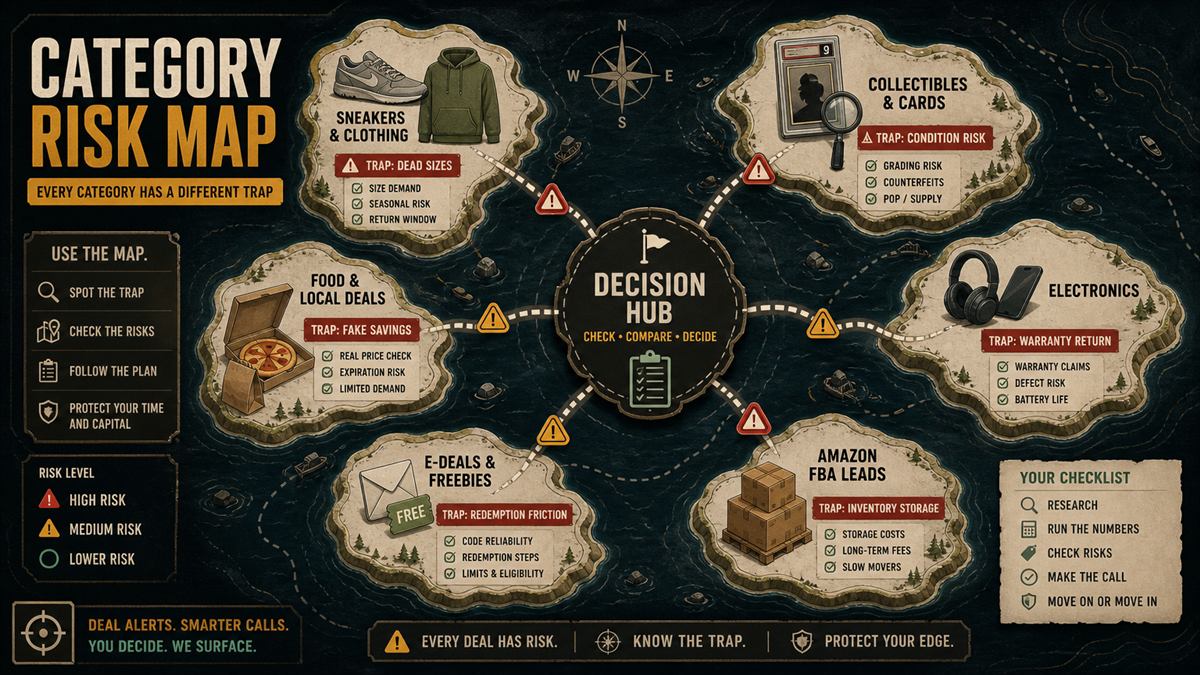
Sneakers benefit from release alerts, restocks, size availability, shock drops, and stock context. Read Endurance For Sneaker Reselling for that workflow.
Pokemon and trading cards benefit from restock alerts, sealed-product availability, retail limits, and inventory changes. The key is avoiding hype-only buys.
Collectibles benefit from limited-drop timing and niche product discovery. The risk is thin demand.
Electronics benefit from price drops, price errors, restocks, and discount stacking. The risk is returns, fraud, and fast price decay.
Clothing benefits from sale alerts, restocks, size availability, and brand drops. The risk is sizing, seasonality, and returns.
E-Deals and food deals benefit from speed because promotions may expire or hit limits. The value may be savings rather than resale profit.
A broad monitor system can be powerful, but only if the member filters categories. Read Endurance For Pokemon, Collectibles, Electronics, And Clothing for the non-sneaker angle.
Monitor Alerts Vs Gargantua AIO
Monitor alerts and Gargantua AIO do different jobs.
Monitors tell you something happened. Gargantua AIO may help you act on certain opportunities. Monitors are discovery infrastructure. Gargantua is execution infrastructure.
A good workflow might look like this:
- Monitor detects restock.
- Member checks category context.
- Member calculates margin.
- Member decides manual, automation, or skip.
- Gargantua AIO supports execution if appropriate.
- Member tracks final result.
The wrong workflow is to treat a monitor alert as an automatic bot trigger. That may work for some experienced users in specific situations, but it is not a safe beginner default.
For a deeper tool review, read Gargantua AIO Bot Review.
How To Test Monitor Quality
Do not test monitors by feelings. Test them with a log.
For every meaningful alert, record:
- Time alert appeared.
- Category.
- Product.
- Source.
- Retail cost.
- Expected resale or savings.
- Fees and shipping.
- Whether you could act in time.
- Whether the deal was still live.
- Whether the item was actually worth buying.
- Final outcome if you acted.
After one week, look for patterns. Are the alerts too late Too noisy Too irrelevant Or are they giving you legitimate opportunities you would have missed
After one month, compare net value against the subscription. The live Whop checkout is the final source for current pricing. Whop's review also references the referenced monthly price and the referenced annual price. If monitors help you create or save more than that, the case improves. If not, renewal is harder to justify.
Buyer Math For Monitor-Driven Deals
| Alert Type | Potential Value | Main Risk | Test Question |
|---|---|---|---|
| Sneaker restock | Fast access to limited sizes | Sellout or weak margin | Did the alert arrive early enough to act |
| Card restock | Sealed product availability | Reprint and hype risk | Are completed sales strong after fees |
| Electronics deal | Larger dollar spread | Returns and price decay | Does net margin survive realistic costs |
| Clothing sale | Brand/size opportunity | Slow sizes and returns | Is the exact item selling |
| Food/E-Deal | Practical savings | Impulse spending | Would you have bought it anyway |
| Price error | High upside if honored | Cancellations | Is the risk acceptable |
This table prevents monitor worship. A monitor is only as valuable as the decision it supports.
Who Endurance Monitors Fit
Endurance monitors fit members who can act during alert windows, know their target categories, and track outcomes. They also fit buyers who want broader coverage than one public deal feed.
They may fit sneaker resellers who need restock speed. They may fit trading-card buyers who watch sealed-product availability. They may fit electronics resellers who can move quickly on price drops. They may fit FBA sellers who evaluate leads through fee and restriction filters. They may fit deal hunters who can convert E-Deals and food deals into real savings.
The strongest fit is someone with a repeatable decision process.
Who Should Ignore Monitors
Ignore monitors if you cannot act quickly, do not want alerts, or find urgency stressful.
Ignore them if you are likely to impulse-buy. Monitor feeds can create a constant sense of scarcity.
Ignore them if you do not want to learn category math. Alerts are not a substitute for understanding resale demand.
Ignore them if you only need slow, evergreen education. In that case, Endurance Beginner Guide may be more relevant than monitors.
Ignore them if the membership fee would pressure you into bad buys.
Trial Checklist
- Verify live price on Whop.
- Pick your category before judging monitor value.
- Mute irrelevant channels.
- Track alert time and your response time.
- Compare alerts against free sources.
- Record expected and actual net value.
- Note which alerts were noise.
- Use Gargantua AIO only after the decision is qualified.
- Review after one billing period.
- Cancel or continue based on data, not activity.
Related Endurance Guides
- Endurance Review 2026
- Is Endurance Legit
- Who Is Keith Adam
- What Is Endurance
- Endurance Pricing
- Gargantua AIO Bot Review
- Endurance For Sneaker Reselling
- Endurance For Pokemon, Collectibles, Electronics, And Clothing
- Endurance Vs Free Cook Groups
- Endurance Beginner Guide
- Endurance Trial Checklist
- Endurance Reviews
- Endurance Alternatives
- Endurance $1,000 Weekly
FAQ
What are Endurance monitors
They are alert systems described in Whop's Endurance review as in-house monitors that help members catch releases, restocks, and deal opportunities. They are discovery tools, not profit guarantees.
Why do monitors matter
They can reduce discovery time. If an opportunity sells out quickly, learning about it faster can matter.
Do monitors guarantee checkout
No. Monitors only alert you. Checkout depends on availability, speed, retailer systems, account setup, competition, and sometimes tools like Gargantua AIO.
Are more monitor alerts better
Not always. Signal quality matters more than volume. Too many irrelevant alerts can hurt decision-making.
What categories can monitors help with
Whop's review describes Endurance across sneakers, Pokemon, clothing, collectibles, electronics, E-Deals, food deals, Amazon FBA tools, and more.
Where can I join Endurance
Use this link: https://whop.com/endurance/endurance?a=digitalartlab
Final Verdict
Endurance monitors are potentially one of the strongest reasons to test the membership, because timing matters in reselling. Faster restock, release, deal, and price alerts can create an edge when they are relevant and actionable.
But monitors are not magic. They are discovery infrastructure. They help you see opportunities earlier; they do not decide whether the opportunity is good.
Check the live Whop listing for current rating, review count, joined count, plan options, and checkout price. Whop's review describes Endurance as launched in 2018 by Keith Adam and highlights in-house monitors, restock alerts, Gargantua AIO Bot, FBA tools, E-Deals, food deals, and broad resale categories.
That is enough to take the monitor layer seriously. The right test is whether those monitors improve your time-to-action and net value in your chosen category.
Join Endurance here: https://whop.com/endurance/endurance?a=digitalartlab