Table Of Contents
- Quick Verdict
- The One Lie: Free Always Costs Less
- The One Fix: Compare Total Cost, Not Subscription Price
- The One Number: Incremental Net Value
- What Free Cook Groups Usually Offer
- What Endurance Adds
- Comparison Table
- When Free Sources Are Enough
- When A Paid Group Makes Sense
- The Risks Of Paid Communities
- The Risks Of Free Communities
- How To Test Endurance Against Free Sources
- Who Should Choose Free First
- Who Should Test Endurance
- Trial Checklist
- Related Endurance Guides
- FAQ
- Final Verdict
Quick Verdict
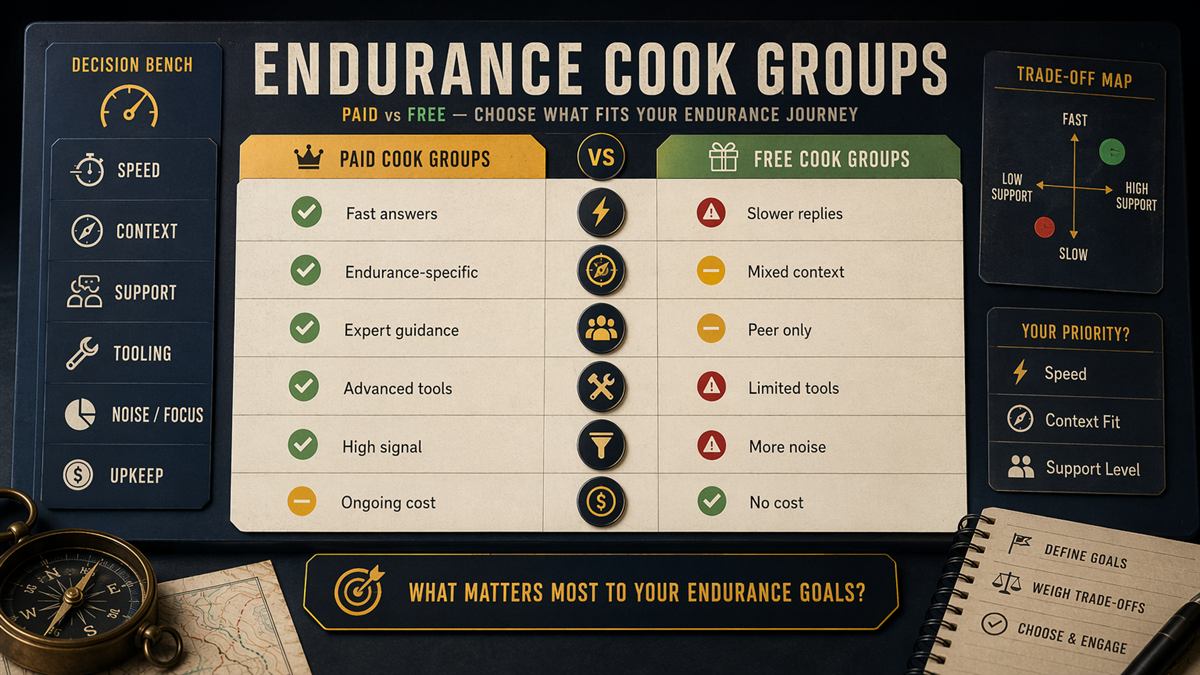
Endurance is not automatically better because it costs money, and free cook groups are not automatically worse because they are free. The real comparison is whether Endurance gives you enough incremental value over free sources to justify the subscription.
Check the live Whop listing for a public rating, public reviews, a public joined count, and current pricing. Whop's Endurance review says it launched in 2018 by YouTuber Keith Adam and describes premium pricing at the referenced monthly price or the referenced annual price. The offer includes Gargantua AIO Bot, custom monitors, insider restock alerts, Amazon FBA tools, E-Deals, free or discounted food, and categories such as sneakers, Pokemon, clothing, collectibles, and electronics.
Free sources can teach you a lot. Public deal feeds, store newsletters, social media accounts, free Discords, Reddit communities, cashback sites, release calendars, and manual research can all surface opportunities. If you are brand new and have little capital, free sources may be the right first step.
A paid group like Endurance makes more sense when speed, organization, monitors, tools, and community context help you act better than free sources. It makes less sense if you only browse, cannot act quickly, or do not track net value.
For the full product review, read Endurance Review 2026. For pricing math, read Endurance Pricing. For the monitor layer, read Endurance Monitors Explained.
The One Lie: Free Always Costs Less
The lie is that free always costs less.
Free has no subscription fee, but free can still cost you. It can cost time, missed opportunities, bad information, late alerts, scattered research, and impulse buys from low-quality leads. If a free source shows you a deal after it is dead, the price was zero and the value was also zero. If a free source pushes a weak product and you buy badly, the source was free but the decision was expensive.
That does not mean free sources are bad. Many serious resellers use free sources every day. The point is narrower: free should be compared by outcomes, not price alone.
Paid groups have the opposite problem. A paid group can look professional because it has a checkout page, a Discord, and premium language. But a paid group can still be noisy, overpriced, vague, or a bad fit.
The correct question is not "free or paid" The correct question is "which option improves my decisions enough to justify its cost"
Endurance has a cost, so it needs to clear a higher bar than free. The live checkout price, and Whop's review references the referenced monthly price or the referenced annual price. That recurring cost is small compared with some business tools, but it is still real. If you do not use the membership, it is wasted.
The One Fix: Compare Total Cost, Not Subscription Price
The fix is to compare total cost.
Total cost includes:
- Subscription fees.
- Time spent searching.
- Missed restocks.
- Bad buys.
- Shipping and platform fees.
- Inventory mistakes.
- Tool complexity.
- Opportunity cost.
- Your ability to act.
A free group may cost nothing but require hours of manual filtering. A paid group may cost money but save time if the monitors and alerts are strong. A free source may be enough for slow deals. A paid source may matter more for fast restocks, shock drops, price errors, and limited inventory.
For Endurance, the paid value stack includes custom monitors, Gargantua AIO Bot, insider restock information, Amazon FBA tools, E-Deals, free and discounted food, and multiple resale categories. That is more than a simple public feed.
But the value stack only matters if you use it. Paying for tools you do not configure, monitors you ignore, and categories you never touch is not rational.
The One Number: Incremental Net Value
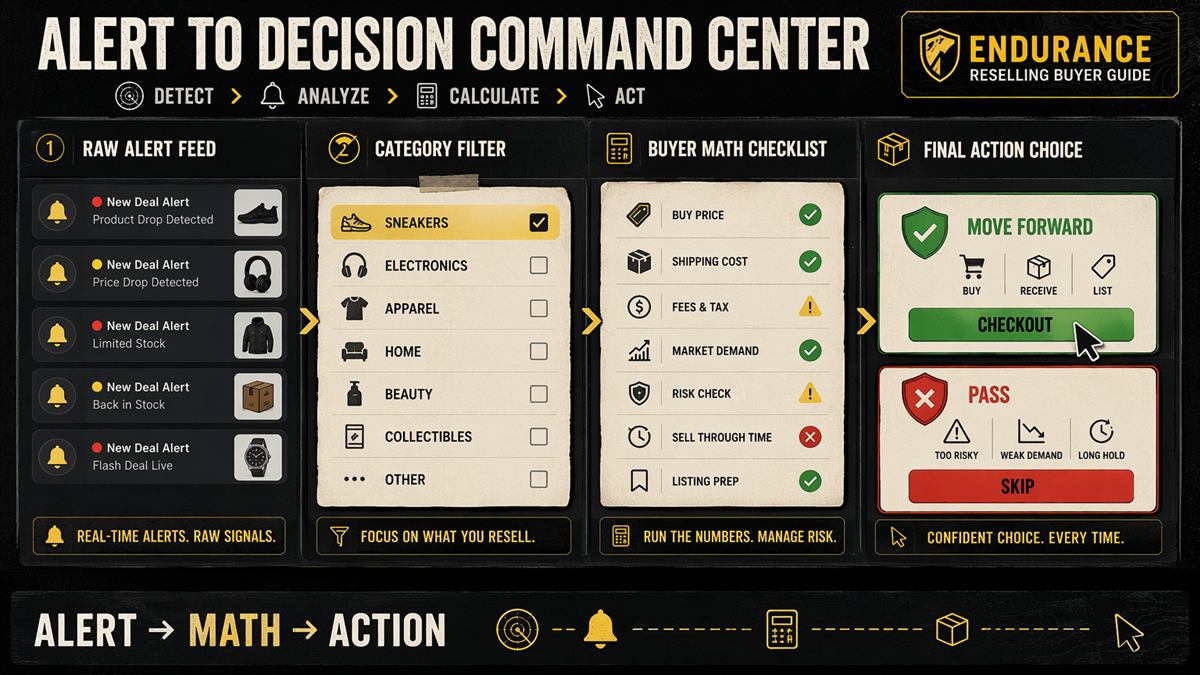
The one number is incremental net value.
Incremental means value you would not have captured without the paid group. Net means after costs.
If you make $100 from a deal that you found from a free public feed and Endurance also posted it, Endurance should not get full credit. If Endurance alerted you earlier, helped you choose the right variant, or gave you context that led to the purchase, then some credit may be fair.
If Endurance costs around the previously observed weekly level, your weekly incremental net value target starts there. If the monthly price is the referenced monthly price, your monthly target starts there. If annual is the referenced annual price, you need confidence that the yearly value will exceed the upfront commitment.
This protects you from vague "worth it" thinking. A paid group is worth it only when it improves your outcome relative to what you could do free.
A strong test is simple: for one billing period, log every deal you found through Endurance, every similar deal you found free, and the final net value. If Endurance produces faster, cleaner, more profitable decisions, keep testing. If not, free may be enough.
What Free Cook Groups Usually Offer
Free cook groups vary widely, but they commonly offer public deal posts, release calendars, basic community chat, social reposts, and beginner discussion. Some are helpful. Some are chaotic. Some are quiet. Some exist mostly to funnel users into paid upsells.
Free groups can be excellent for learning vocabulary. You can watch how people discuss releases, restocks, sizes, discounts, bots, fees, and platforms. You can learn without pressure. You can decide whether reselling even interests you before paying.
The limits are usually speed, reliability, structure, and support. Free groups may post late. They may lack custom monitors. They may be noisy because anyone can join. They may have less incentive to maintain high-quality alerts. They may rely heavily on public sources that everyone else already sees.
For beginners, those limits may be acceptable. If you do not have capital or time to act, paying for faster alerts may not help.
What Endurance Adds
Endurance adds a paid structure around deal discovery and execution.
The verified/current product facts include strong public marketplace signals: public rating, public reviews, a public joined count, and current weekly pricing. Whop's review connects Endurance to Keith Adam, says it launched in 2018, and describes premium membership with Gargantua AIO Bot, custom monitors, insider restock alerts, Amazon FBA tools, E-Deals, free and discounted food, and categories including sneakers, Pokemon, clothing, collectibles, and electronics.
Those additions matter because they address common free-source weaknesses:
Monitors can improve speed. Gargantua AIO can support certain execution workflows. Category channels can organize opportunities. Community context can help filter deals. FBA tools can support more structured sourcing. E-Deals and food deals add savings utility beyond resale.
That does not mean Endurance is automatically superior. It means the paid comparison has substance. You are not only paying for messages; you are evaluating a broader operating system.
For the components in detail, read What Is Endurance, Gargantua AIO Bot Review, and Endurance Monitors Explained.
Comparison Table
| Factor | Free Cook Groups | Endurance |
|---|---|---|
| Upfront cost | Usually free | Current listing shows the live weekly price |
| Alert speed | Varies widely | Custom/in-house monitors described by Whop |
| Tool access | Usually limited | Gargantua AIO Bot and FBA tools described |
| Category breadth | Varies by group | Sneakers, Pokemon, clothing, collectibles, electronics, E-Deals, food deals |
| Trust signals | Often unclear | public rating, public reviews, a public joined count on Whop |
| Structure | Often noisy | Paid community structure on Whop/Discord-style workflow |
| Best for | Learning, low-budget testing, casual browsing | Active users who can act on alerts and track value |
| Main risk | Late/noisy info | Paying without using it |
The table shows the real tradeoff. Free sources are better for low-risk learning. Endurance is better positioned for members who need speed, tools, structure, and broader coverage.
When Free Sources Are Enough
Free sources are enough when you are still learning the basics. If you do not know how to calculate fees, compare completed sales, ship products, or choose categories, free education should come before paid alerts.
Free sources are also enough if you have no capital. A paid group cannot create inventory budget. If the subscription itself strains you, start free.
Free sources may be enough if your category is slow-moving. Some flips do not require instant alerts. If you source locally, study clearance sections, or buy from predictable sale cycles, paid monitors may be less important.
Free sources can also be enough if you only want occasional personal savings. Public coupon sites, store newsletters, and cashback tools may cover your needs.
The key is honesty. Do not pay for speed before you can use speed.
When A Paid Group Makes Sense
A paid group makes sense when the subscription solves a real bottleneck.
If your bottleneck is alert speed, monitors may help. If your bottleneck is fragmented categories, Endurance's breadth may help. If your bottleneck is execution on certain drops, Gargantua AIO may be relevant. If your bottleneck is FBA sourcing, Endurance's FBA tools may matter. If your bottleneck is deal discovery across many lanes, the combined feed may justify the price.
A paid group also makes sense when you can measure value. If you already sell online, understand fees, and track profit, you can test Endurance rationally. You can compare what you found through Endurance with what you found free.
Paid communities are most dangerous for people who want motivation. Do not buy Endurance because paying might make you take reselling seriously. Buy it when you have a process that can use the information.
The Risks Of Paid Communities
Paid communities can create a false sense of professionalism. A polished group can make members feel like they are operating a business even when they are only reacting to alerts.
The recurring fee can also distort behavior. Some members feel pressure to "make back" the subscription and start forcing buys. That is backwards. The membership should support good decisions, not create desperate ones.
Paid groups can be noisy too. Paying does not guarantee clean signal. A group can have tools and still overwhelm beginners. A community can have strong reviews and still be a poor fit for your schedule or category.
Finally, paid groups can encourage subscription stacking. If you join multiple groups, tools, proxies, data services, and marketplaces, your monthly break-even rises. Endurance may be affordable by itself, but total operating cost matters.
The Risks Of Free Communities
Free communities can be late. They can be copied from public feeds. They can be full of unverified claims. They can be dominated by beginners. They can be monetized through hidden affiliate incentives. They can lack moderation.
Free also makes it easy to never commit to a process. Because there is no cost, you may browse casually forever and never track outcomes.
Still, free sources are valuable. The problem is not free. The problem is unmeasured free. If a free source consistently helps you find profitable or useful deals, keep it.
How To Test Endurance Against Free Sources
Testing is straightforward.
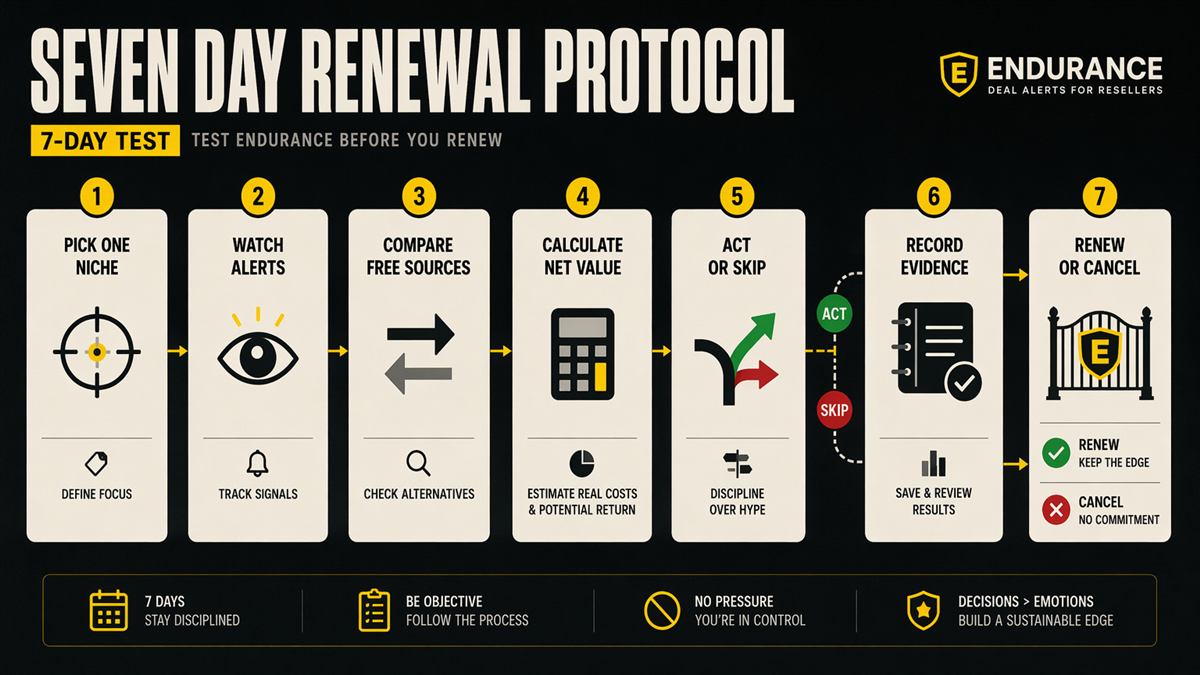
For two weeks, keep a deal log. Track every Endurance alert you considered and every free-source deal you considered. Record source, time, product, category, expected net value, whether you acted, and final outcome.
Then compare:
- Did Endurance alerts arrive earlier
- Were they better organized
- Did they cover categories free sources missed
- Did tools like Gargantua AIO or FBA resources matter
- Did community context prevent bad buys
- Did E-Deals or food deals create real savings
- Did the value exceed the subscription cost
If Endurance wins on speed, organization, and net value, the paid case is stronger. If free sources produce the same value, do not keep paying out of habit.
For a full testing plan, read Endurance Trial Checklist.
Who Should Choose Free First
Choose free first if you are new, undercapitalized, unsure which category you like, or unable to act on alerts. Choose free first if you still need to learn resale math. Choose free first if you want to understand sneakers, Pokemon, electronics, clothing, collectibles, or FBA before paying for a community.
Free first is not a failure. It is often the right path. Paid tools are more useful after you understand the basics.
Who Should Test Endurance
Test Endurance if you already know your category, have capital, can respond to alerts, and want better organization than public feeds. Test it if you need monitors, want to evaluate Gargantua AIO, or can use multiple categories.
Endurance may also be worth testing if you value Whop's public trust signals. The live listing should be checked for 5.0, public reviews, and a public joined count. That does not guarantee your result, but it gives you more proof than an anonymous server.
Trial Checklist
- Verify live Endurance pricing on Whop.
- Pick one free source set to compare against.
- Pick one Endurance category to test first.
- Log all alerts and outcomes.
- Track incremental net value only.
- Do not count deals you would have found anyway as full Endurance value.
- Test monitors during times you can actually act.
- Review tool usage, not just chat activity.
- Decide before renewal.
- Keep the option that produces better measured value.
Related Endurance Guides
- Endurance Review 2026
- Is Endurance Legit
- Who Is Keith Adam
- What Is Endurance
- Endurance Pricing
- Gargantua AIO Bot Review
- Endurance For Sneaker Reselling
- Endurance For Pokemon, Collectibles, Electronics, And Clothing
- Endurance Monitors Explained
- Endurance Beginner Guide
- Endurance Trial Checklist
- Endurance Reviews
- Endurance Alternatives
- Endurance $1,000 Weekly
FAQ
Is Endurance better than a free cook group
It depends on whether Endurance gives you more incremental net value. Endurance has paid monitors, tools, broad categories, and Whop trust signals, but free sources may be enough for beginners or casual users.
Should beginners pay for Endurance immediately
Not always. Beginners with little capital may be better off learning through free sources first, then testing Endurance once they know what category and workflow they want.
What does Endurance add over free sources
Whop's review describes Gargantua AIO Bot, custom monitors, insider restock alerts, Amazon FBA tools, E-Deals, food deals, and broad categories. The live listing should be checked for 5.0, public reviews, a public joined count, and current weekly pricing.
Can a free group still be good
Yes. Free groups can be useful for education, public deals, and low-risk learning. The question is whether they are fast, accurate, and relevant enough for your goals.
Where can I join Endurance
Use this link: https://whop.com/endurance/endurance?a=digitalartlab
Final Verdict
Free cook groups are the right first step for many beginners. They cost nothing, teach vocabulary, and let you explore reselling without adding a recurring fee.
Endurance makes sense when you are ready to use paid infrastructure: custom monitors, Gargantua AIO Bot, insider restock alerts, FBA tools, E-Deals, food deals, and broad category coverage. Check the live Whop listing for current rating, review count, joined count, plan options, and checkout price. Whop's review ties Endurance to Keith Adam, says it launched in 2018, and references the referenced monthly price or the referenced annual price.
The decision is not ideological. Measure incremental net value. If Endurance helps you act faster, filter better, and earn or save more than the subscription, it may be worth testing. If free sources produce the same value, keep using free.
Join Endurance here: https://whop.com/endurance/endurance?a=digitalartlab